Eating Patterns
The Rhythm Behind a Nutritionist's Weekly Food Record
14 January 2026 · 9 min read
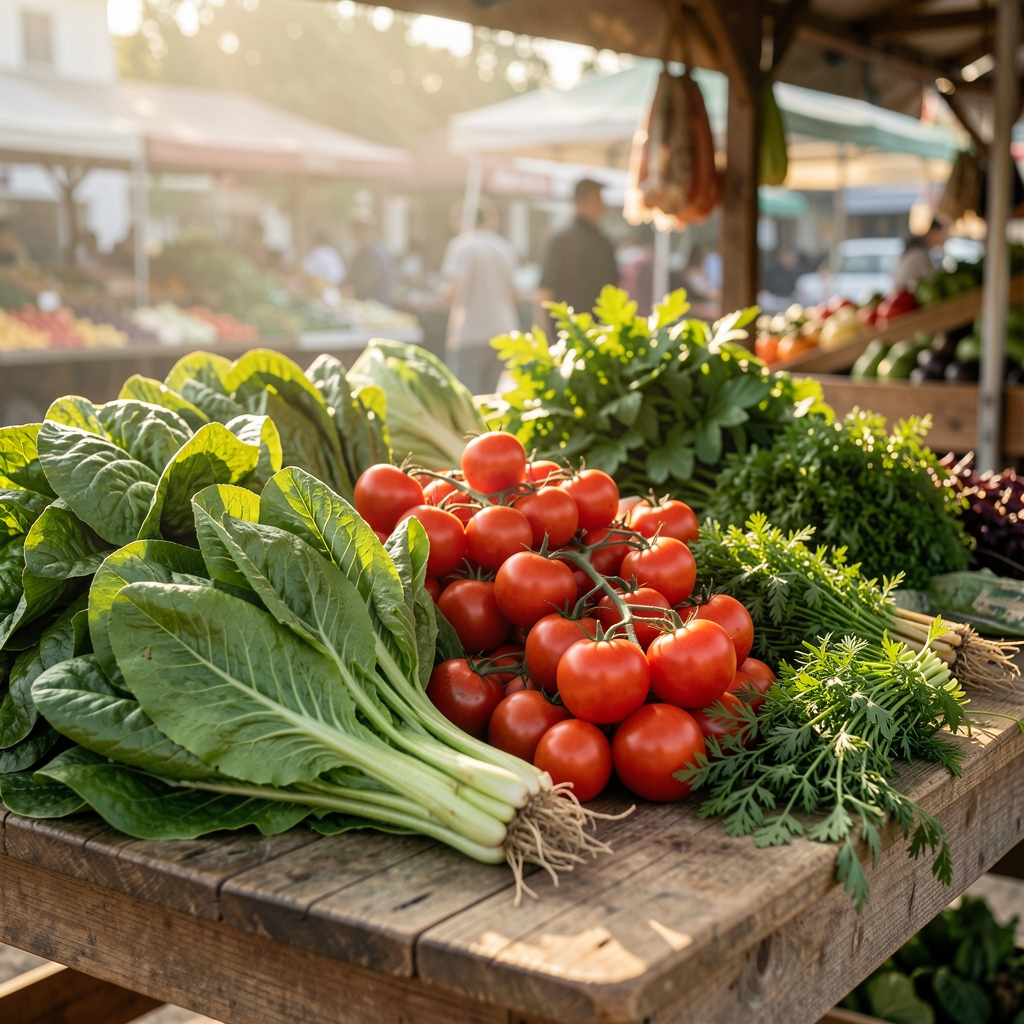
The calendar has always been a nutritional guide — not in the sense of prescribing what to eat, but in the sense of determining what is available, fresh, and worth building a meal around. Eating with the seasons is not a contemporary food trend; it is a return to a mode of eating that preceded the global produce supply chain.
In England, the seasonal rhythm of vegetables and fruit is more pronounced than in many other climates. Summer brings courgettes, runner beans, and tomatoes in abundance. Autumn offers squash, root vegetables, and the last of the stone fruits. Winter narrows the fresh palette — but what remains, including kale, leeks, and celeriac, is dense in nutrients and well-suited to the kinds of slow-cooked meals that cold weather invites. Spring reopens the palette with asparagus, broad beans, and the first tender salad leaves.
From a nutritional standpoint, this seasonal rotation has a meaningful effect on dietary variety. A person who eats broadly with the calendar will, over the course of a year, consume a wider range of vegetables and fruits — and therefore a wider range of micronutrients — than someone whose shopping list remains constant regardless of the month.
Wider dietary variety is consistently associated in nutritional literature with a more diverse intake of vitamins, minerals, and dietary fibre. It is also associated, in observational research, with more stable body weight over time — not because seasonal produce is itself a weight-regulating substance, but because the habits that accompany seasonal eating tend to include more home cooking, more fresh ingredients, and a more attentive relationship with the plate.
Eating seasonally is less an act of constraint than an act of orientation — allowing the available produce to shape the week's cooking rather than working against it.
The connection between dietary variety and gradual weight balance is one of the more nuanced areas of applied nutrition. It does not operate through a direct mechanism — there is no single nutrient in seasonal produce that produces weight stability. Rather, the effect is systemic: diverse food choices tend to deliver a broader nutritional profile, which supports the body's overall sense of sufficiency.
When the diet is narrow — when the same small set of foods appears week after week — the body may register a kind of nutritional incompleteness that expresses itself as persistent appetite even after an adequate caloric intake. This is a simplified account of a complex phenomenon, and it is important not to overstate it. But it is a pattern that nutritionists observe regularly in food diaries, and it is one reason why dietary variety is considered an important dimension of a well-considered approach to food and weight.
Seasonal eating introduces variety by default. If the market does not have tomatoes in February, the cook turns to something else — and that something else introduces a different nutritional profile. Over months and years, this enforced variety accumulates into a genuinely diverse dietary history.
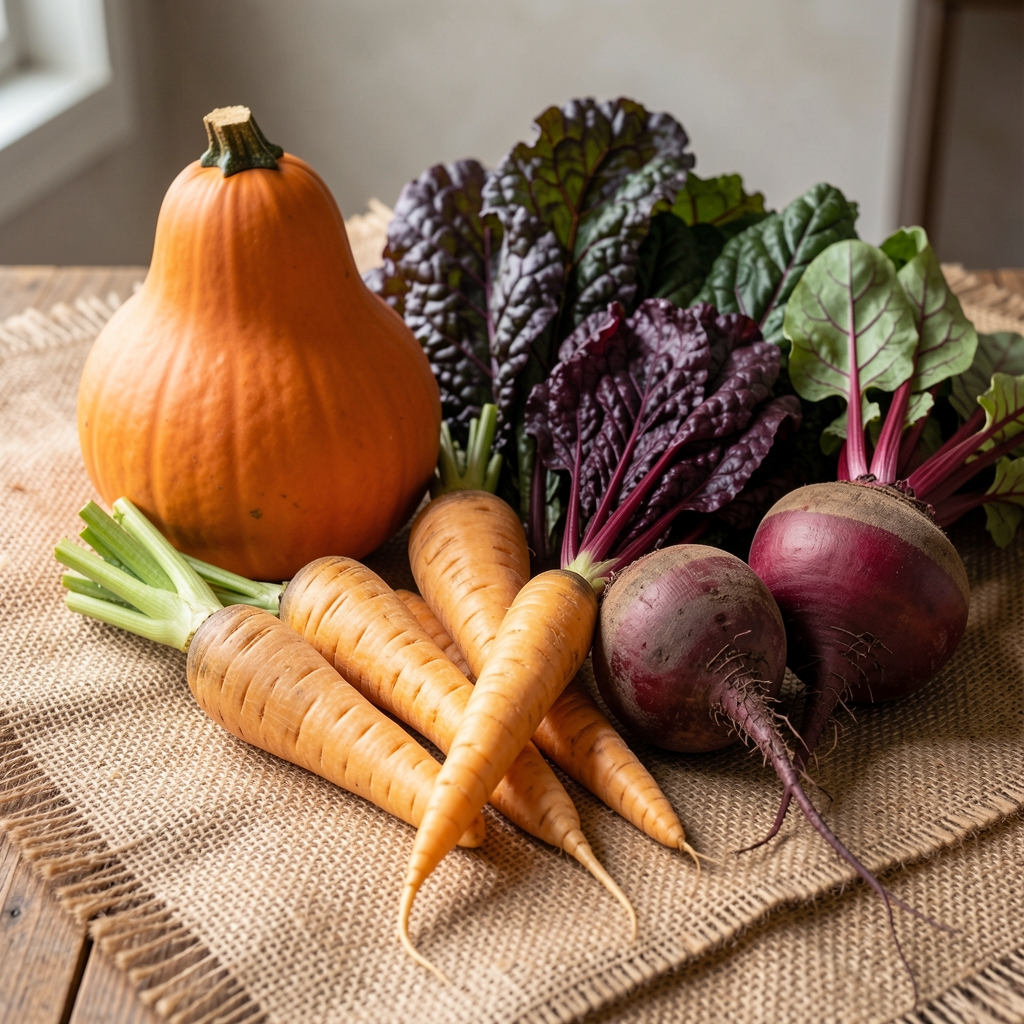
Seasonal eating provides a natural infrastructure for plant-based cooking. When fresh vegetables and legumes are at the centre of the plate — supported by whole grains and whatever protein the household prefers — the meal is structured around ingredients that support a sense of fullness through fibre and volume rather than through caloric density alone.
This is not an argument for any particular dietary approach. It is an observation about what seasonal produce makes easy: building meals where vegetables are the main event, and where the protein and grain components play a supporting rather than dominant role. When the market is full of good kale, roasted kale with lentils becomes a natural dinner. When courgettes are at their peak, a simple pasta with courgette and olive oil requires no elaboration.
For those interested in gradual weight change, this structural observation is more practically useful than many dietary frameworks. It does not require a programme or a set of rules — it requires only attention to what is available, and a willingness to cook from it. The cooking itself — which tends to be simpler with fresh seasonal produce than with complex processed ingredients — introduces a further benefit: the person who prepares their own food has a direct awareness of what goes into it, which is itself a form of portion and ingredient awareness.
"The market in February tells you something honest about what the body has always eaten in winter. Listening to that is a form of nutritional attention that no formula can replace."
Fruit presents a slightly different case in the seasonal eating discussion. Unlike vegetables, which can largely be preserved, stored, or cooked into a neutral form, fruit tends to be most valuable — nutritionally and sensory — at its moment of ripeness. A strawberry in June and a strawberry in January are substantially different experiences, and not only in terms of taste.
The nutritional density of fresh fruit is highest when the fruit is in season. The sugar content is also highest, which is why some nutrition frameworks caution against excess fruit consumption. But in the context of a well-varied daily diet that includes sufficient protein, fibre, and whole grains, the sugar content of seasonal fruit is not a primary concern for most people. The more relevant consideration is variety: over the course of a year, seasonal fruit consumption introduces a changing array of vitamins, antioxidants, and phytonutrients that no fixed-year fruit basket can replicate.
From a weight-balance perspective, fruit occupies an interesting position. It tends to be satisfying — a piece of fresh seasonal fruit, eaten slowly and with attention, provides a meaningful contribution to the sense of fullness after a meal. When consumed as part of a regular eating rhythm, rather than as an anxious post-dinner addition, it integrates naturally into the nutritional picture.

What does it look like, in practice, to build a week's eating around seasonal produce? It begins with a single visit to a market or greengrocer with a clear eye for what looks fresh and abundant — not what the recipe demands, but what the season is offering. From that starting point, the week's cooking shapes itself.
A winter week might centre on: roasted root vegetables paired with lentils; a soup of celeriac and white beans; a quick stir-fry of kale and garlic with brown rice; a baked potato with leek and cottage cheese. None of these meals require extensive preparation. Each is built around one or two seasonal vegetables that form the structural heart of the plate.
What changes when this approach is sustained over several weeks is not merely the nutritional profile of the meals — it is the relationship with food itself. Seasonal eating encourages a slightly different pace: it introduces a reason to notice what time of year it is, to visit a market with attention, to cook from what is available rather than from habit. These are quiet shifts, but they tend to accumulate into a more considered overall relationship with the plate — which is, in the end, one of the most reliable foundations for gradual and sustainable weight balance.

Eleanor Whitfield is the senior editor of Talek Letters and a qualified nutrition professional based in London. Her writing focuses on everyday food practices, weight awareness, and the relationship between eating patterns and sustained energy. She has contributed to several independent nutrition publications since 2018.
More from Eleanor